bLOG
What Expenses Can an Electrician Claim in the UK? A Sole Trader's Guide
- Home
- Blog
- What Expenses Can an Electrician Claim in the UK?
What Expenses Can an Electrician Claim in the UK? A Sole Trader's Guide
If you are searching for what expenses an electrician can claim in the UK, you are probably staring at a Self Assessment bill that felt higher than it should, or a bank statement full of costs you have never thought to write down. The short answer is that almost every cost you incur because you run an electrical business is allowable, from your testing kit to the diesel in your van. The part that catches tradespeople out is not the obvious stuff. It is the smaller, recurring costs that get forgotten every single tax year, and the CIS deductions that get reclaimed too late or not at all.
The "wholly and exclusively" rule
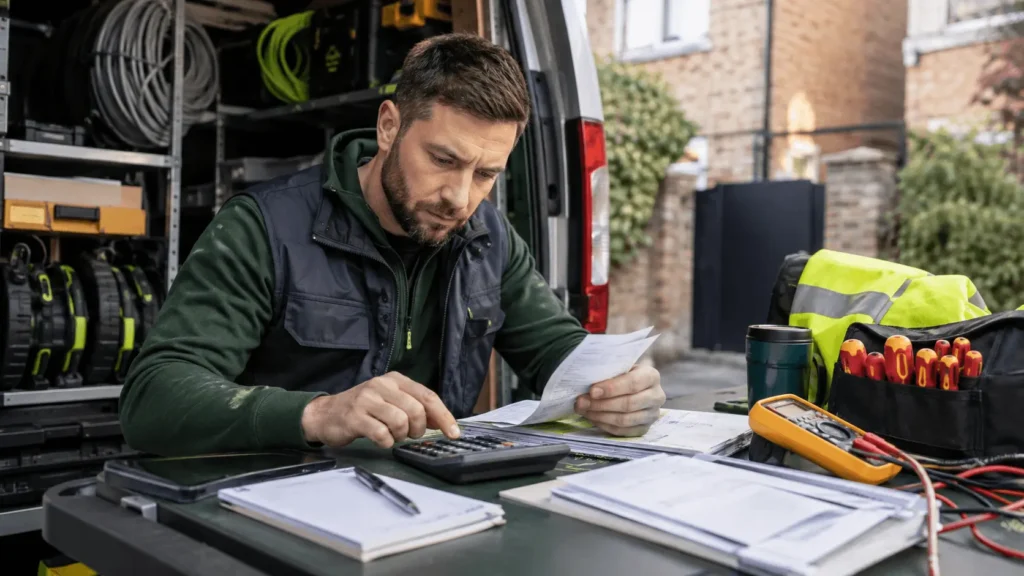
HMRC’s test for an allowable expense is that it must be wholly and exclusively for the business. If a cost is entirely business-related, you deduct the full amount. If it is part business and part personal, such as a phone you also use at home, you claim only the business share. Sole traders with turnover under £1,000 a year can instead use the trading allowance and skip itemising altogether, though for most working electricians the actual expense total is far higher than £1,000, so itemising wins. Full detail on what qualifies sits within your Self Assessment tax return.
Tools, testing equipment and PPE

Hand tools, drill bits, cable strippers, and consumables are revenue expenses, deducted in full the year you buy them. Larger purchases, a new multifunction tester, a thermal imaging camera, or van racking, usually still qualify for a full deduction in the year of purchase through the Annual Investment Allowance, which covers up to £1,000,000 of qualifying equipment for the 2026/27 tax year. PPE, safety boots, hard hats, gloves, and hi-vis all count, provided they are for site safety rather than everyday wear. Run your full kit list through the Allowable Expenses Calculator to see the actual deduction.
Van running costs, mileage and travel
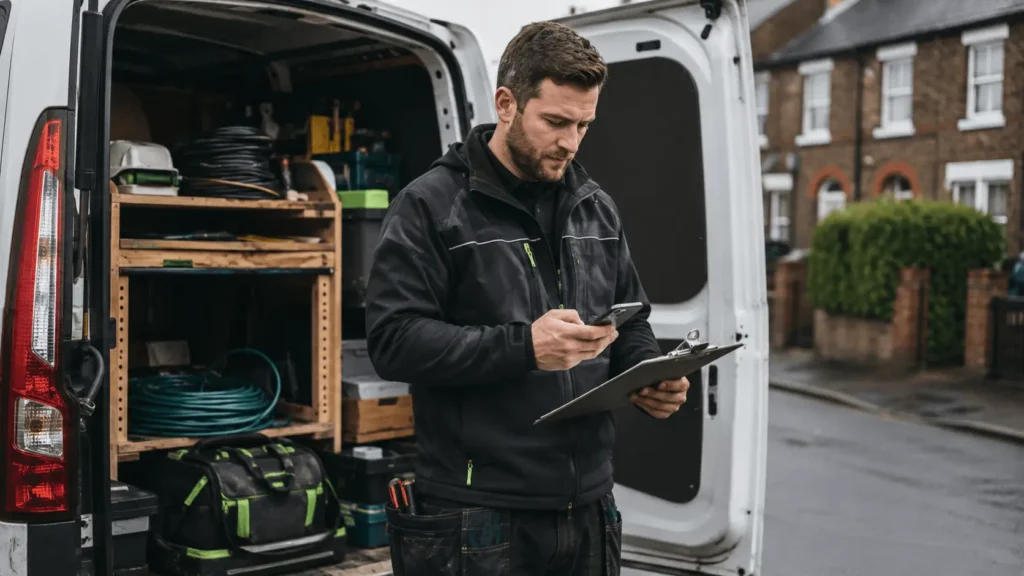
You have two methods for vehicle costs, and you must pick one per vehicle and stick with it for as long as you own that vehicle. The simplified mileage method uses a flat rate per business mile, which rose for the 2026/27 tax year to 55p for the first 10,000 miles and 25p after that, the first change to this rate since 2011. Alternatively, you can claim the actual business proportion of fuel, insurance, servicing and finance costs. Travel from home to a temporary site counts; your daily commute to a fixed base does not.
Training, certification and professional body fees
NICEIC or NAPIT membership, your ECS card renewal, 18th Edition update courses, and professional indemnity or public liability insurance are all allowable, because they maintain skills and standing you already hold. The line HMRC draws is between updating an existing trade and acquiring a new one: training that gives you your first electrical qualification generally is not deductible, while CPD that keeps an existing qualification current is.
Home admin, phone and materials
If you run quotes, invoicing or admin from home, you can claim a flat rate of £10 to £26 a month depending on hours worked, or the actual business proportion of your household costs. Your phone bill, accounting software and quoting apps are claimable in the business proportion you actually use them. Materials you buy and pass through to a client sit slightly differently: they are a cost of sale set against the income from that job, not a personal deduction, but they still reduce your taxable profit in the same way.
What CIS subcontractors need to know
If you work under another contractor’s Construction Industry Scheme, they will typically deduct 20% of your labour (30% if you are not registered) before paying you. That deduction is a payment on account of your tax, not your final bill. Your actual liability is still calculated from your profit after every allowable expense above, and the gap between what was deducted and what you actually owe is what gets refunded. This is the single most common reason electricians leave money with HMRC: they treat the CIS deduction as the end of the process instead of the starting point. See how to claim a CIS refund for the full process.
What you cannot claim

Everyday clothing that is not PPE, fines and penalties, client entertaining, and the cost of qualifying for the trade in the first place are all disallowed. So is anything that is really personal use dressed up as business, such as wiring work at your own home.
How to actually claim it
Every allowable expense above is entered on your Self Assessment return, due online by 31 January following the tax year that ended on 5 April. Keep receipts and a mileage log throughout the year rather than reconstructing them in January. If you are unsure whether your total expenses beat the £1,000 trading allowance, or whether your CIS deductions leave you owed money, check your position with the Tax Readiness Score before you file.
Claiming every allowable expense will not eliminate your tax bill, but for most working electricians it makes a genuine difference to what is owed, and it is the single easiest thing to get wrong through simple omission rather than any error in your figures. Start with the Allowable Expenses Calculator, and if you are CIS registered, check what you are actually owed rather than assuming the deduction already settled it.
Electrician Expenses: Frequently Asked Questions
Can I claim my van if I also use it for personal trips?
Yes, but only the business share. Using the 2026/27 mileage rate of 55p a mile covers business journeys only, so personal trips are excluded automatically. If you claim actual van costs instead, you must apportion fuel, insurance and servicing between business and personal use.
Do I need receipts for every small tool I buy?
Yes. HMRC expects evidence for every claim, however small. Keep receipts, bank statements or a simple spreadsheet log for tools, PPE and consumables. Under Making Tax Digital, digital record-keeping is required for many sole traders, so a paper shoebox of receipts is no longer enough on its own.
Can I claim the cost of my first electrician qualification?
Generally no. HMRC treats training that gets you your first qualification in a trade as a personal cost, not a business expense, because it puts you into the trade rather than maintaining skills you already have. Ongoing CPD, like 18th Edition updates, is different and is allowable.
If CIS tax is already deducted, why would I still get a refund?
Because the 20% (or 30%) deducted under the Construction Industry Scheme is a payment on account, not your final bill. Your real tax is worked out from your profit after allowable expenses. If that figure is lower than what was deducted, the difference is refunded.
What happens if I do not claim an expense in the year I paid for it?
You may still be able to include it if you are within HMRC’s time limit for amending a Self Assessment return, generally 12 months after the filing deadline. After that, the expense cannot usually be added, which is why keeping records throughout the year matters more than a January scramble.

Mustafa Rehman
Mustafa Rehman is an ACMA and CGMA finance professional who contributes practical financial insight to Hammer & Ledger. His professional background includes financial reporting, finance transformation, post-acquisition integration and management accounting, helping support clear and useful content for UK businesses and tradespeople.